
Tag: seed grant
-

Re-Centering the Labor Movement in Conceptualizations of AI Literacy
Performing AI Ethics explores how artificial intelligence is publicly framed, justified, and normalized through panels, podcasts, and policy conversations. The project combines live performance with deepfaked media, staging interactions between live actors and simulated AI ethics figures to expose how authority, urgency, and moral responsibility are performed.
-
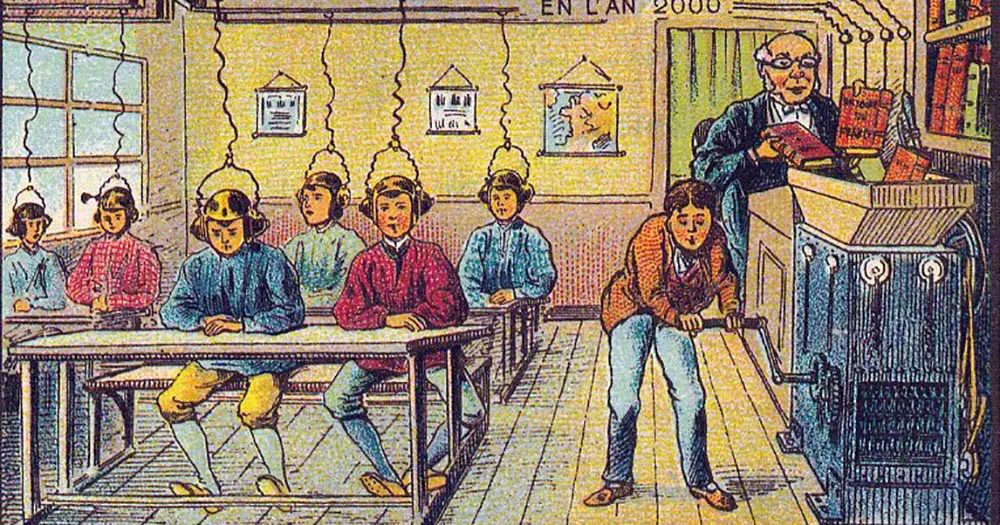
Developing Critical AI Literacy with Metro Atlanta Educators
PI: Luke Ziegler, PhD (University of West Georgia) Collaborator: Jenna Harte, PhD (University of West Georgia) Since the launch of ChatGPT and AI tools for education (MagicSchoolAI, SchoolAI e.g.), metro Atlanta educators have received varying amounts of support and professional development. Some districts have championed the use of AI tools for personalized learning and resource…
-
What is a Forest? Multispecies + AI Ecologies of Atlanta
PI: Ash Eliza Smith (University of Georgia) What Is a Forest? is an arts-based research project exploring how forests are sensed, modeled, and understood across living and nonliving systems around Atlanta. It investigates the “stack” of the Atlanta forest—soil, clay, roots, fungi, trees, canopy, birds, sensors, archives, and AI datasets—to ask: What counts as a…
-
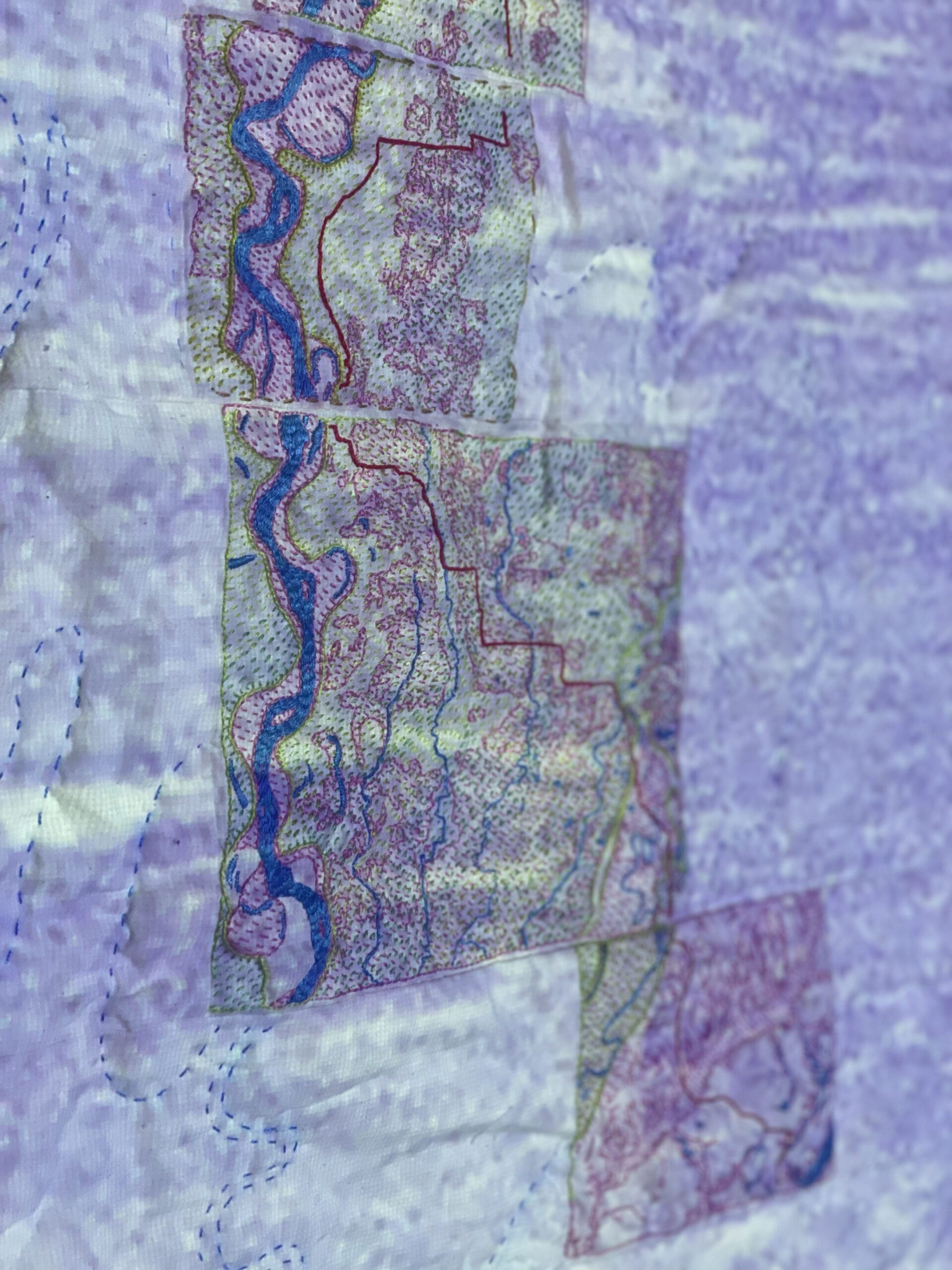
Collaboratively Communicating AI’s Water Impact through Public Textile Art
This work critically addresses the impact of Data Centers on Atlanta’s local environmental, energy, and economic ecologies through arts-based research. We propose to commission three local artists to create textile artworks to communicate the local concerns and impacts of data centers.
-

Re-Materializing Stone Mountain: Stitching the Automated Surface
This project explores how artificial intelligence perceives and rematerializes place by reinterpreting the front surface of Stone Mountain, a site shaped by deep geological time and a complex political history. Using generative models whose understanding of place is shaped by fragmented visual data, the work explores how AI often simplifies or misreads culturally layered landscapes.
-
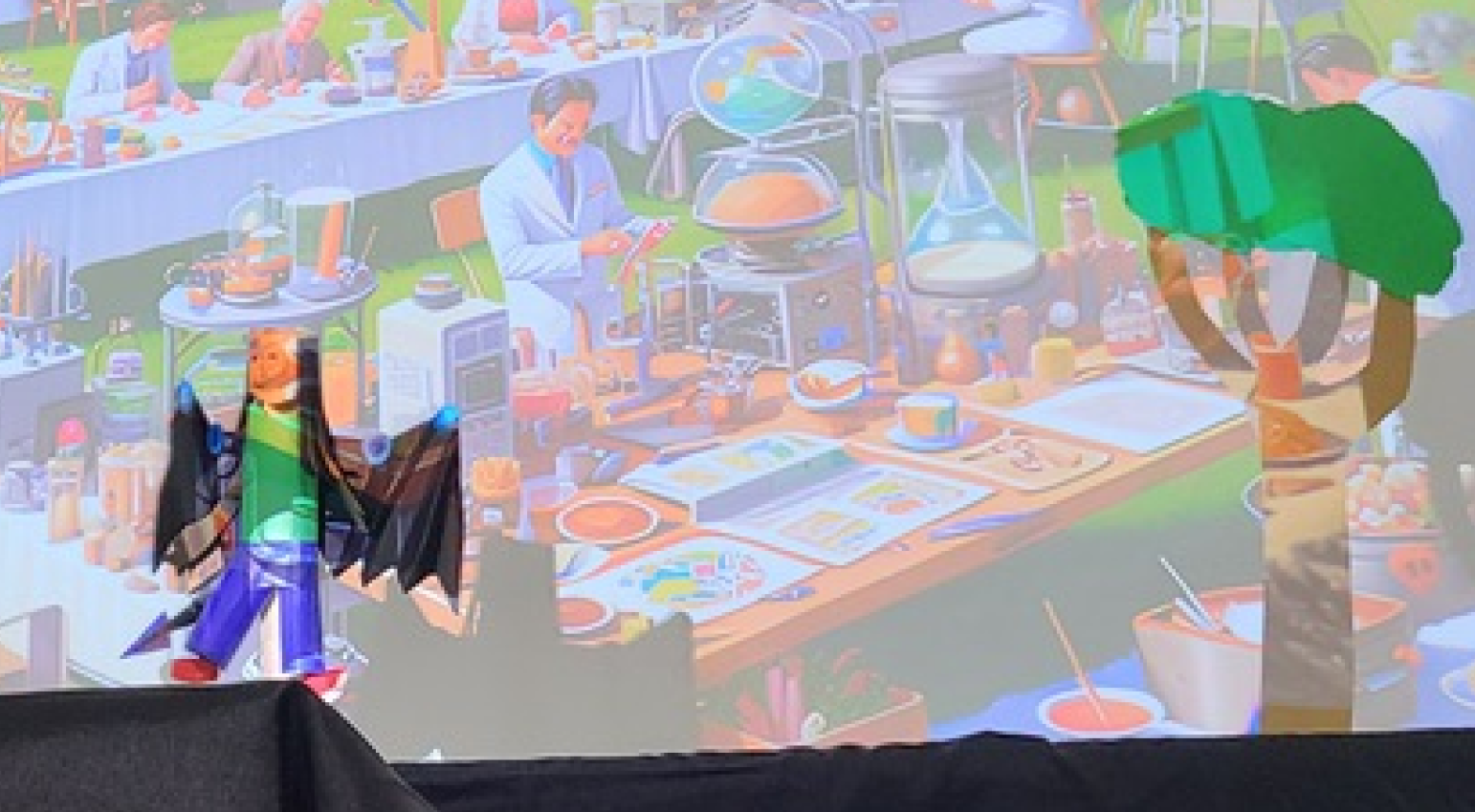
CultureFutures: Material Exploration of AI, Culture and Atlanta
Our project will investigateAI education through the lens of material cultures of specific communities in metro Atlanta. We focus on how culture scaffolds critical AI literacy efforts through material practices. We will partner with, Agape Foundation, a local non-profit that works with youth.
-
Performing AI Ethics
Performing AI Ethics explores how artificial intelligence is publicly framed, justified, and normalized through panels, podcasts, and policy conversations. The project combines live performance with deepfaked media, staging interactions between live actors and simulated AI ethics figures to expose how authority, urgency, and moral responsibility are performed.
-
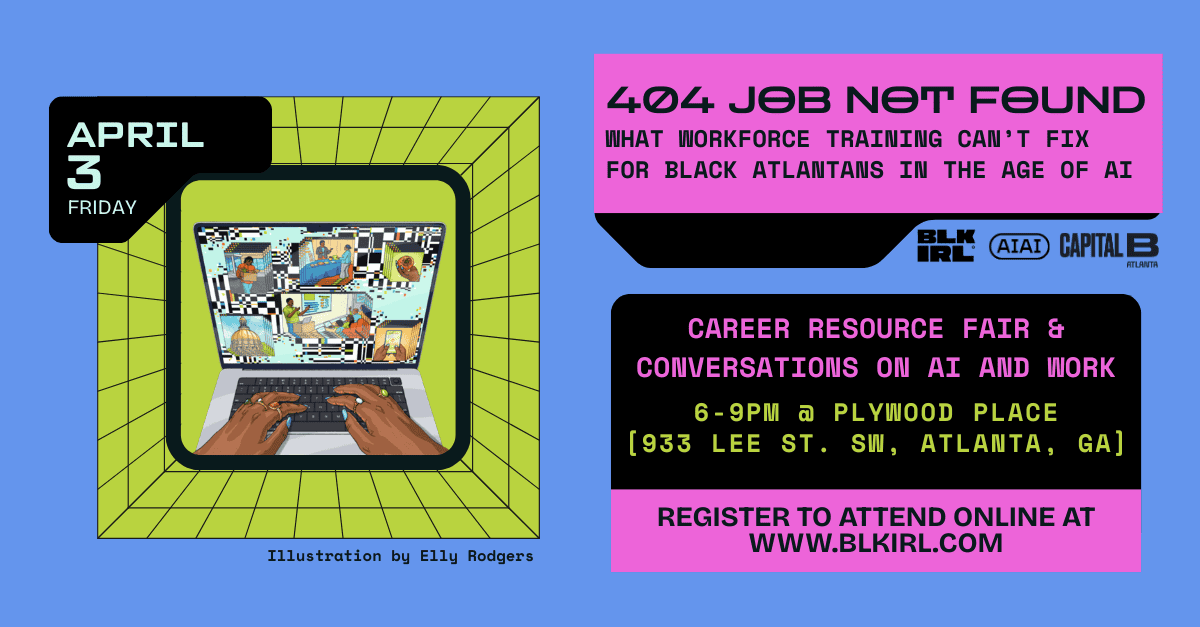
(404) Job Not Found: What Workforce Training Can’t Fix for Black Atlantans in the Age of AI
As AI becomes embedded in everyday workplace tools, “AI literacy” is increasingly treated as a baseline requirement for employability. But what actually counts as an AI skill—and who gets to decide?
-

Atlanta Beltline and AI
This research investigates the human–AI dynamics created by the growing presence of autonomous food-delivery robots along the Atlanta BeltLine. As a major corridor for cyclists and runners, the BeltLine is experiencing increased co-presence between riders and driverless delivery bots whose navigation patterns may introduce new forms of distraction, uncertainty, or perceived risk.
-
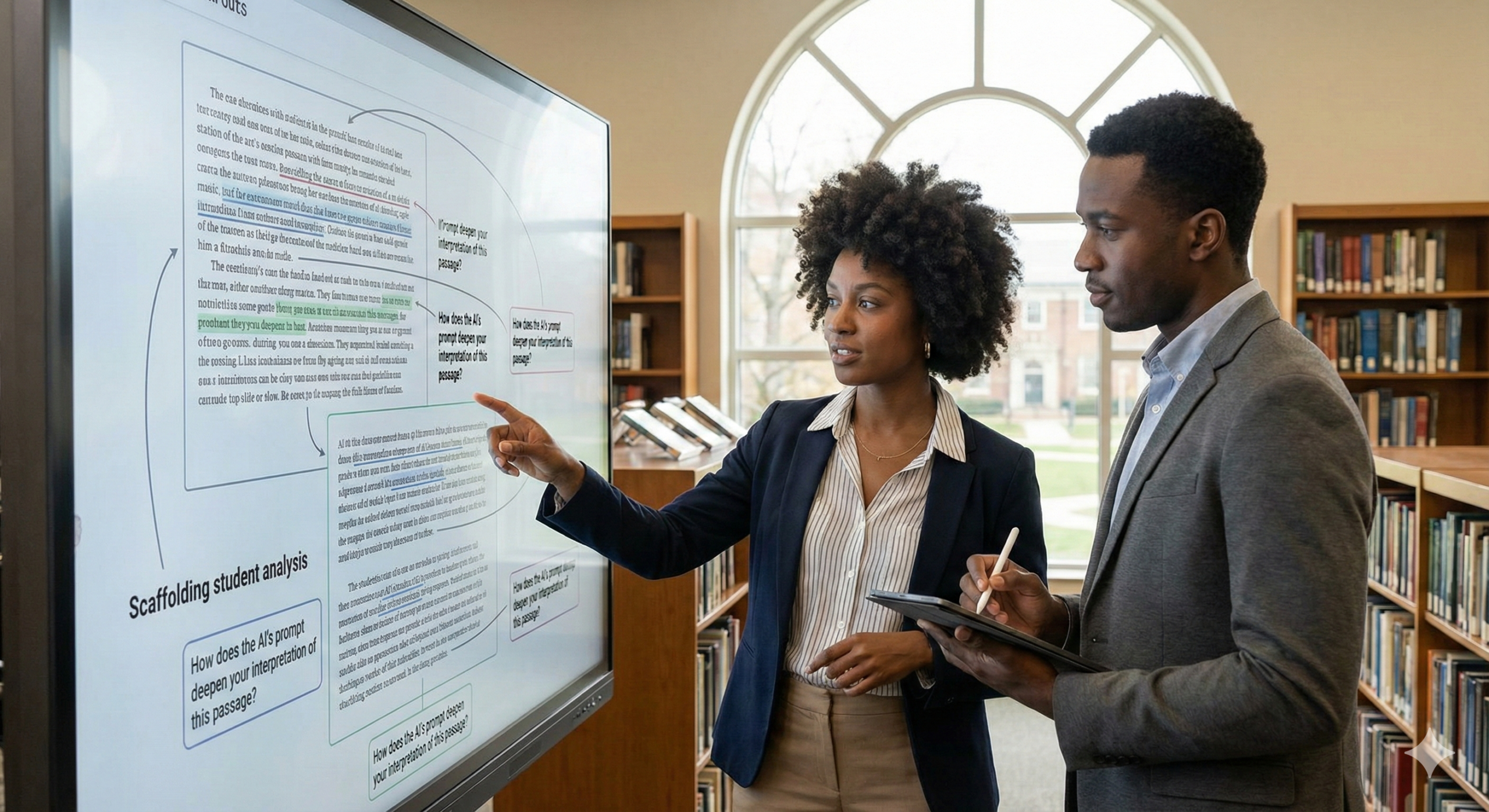
Prompting Humanistic Thinking: Using AI to Deepen Interpretation, Scaffolding, & Student Learning in Humanities Classrooms
This project will develop and pilot a humanities-centered AI faculty workshop that reframes artificial intelligence as a tool for interpretation, scaffolding, and student agency—not a shortcut for cognition. Building on our 2025 Associated Colleges of the South (ACS) interdisciplinary AI workshop, this project offers a structured model for interpretation-first prompt engineering that centers the needs…
-
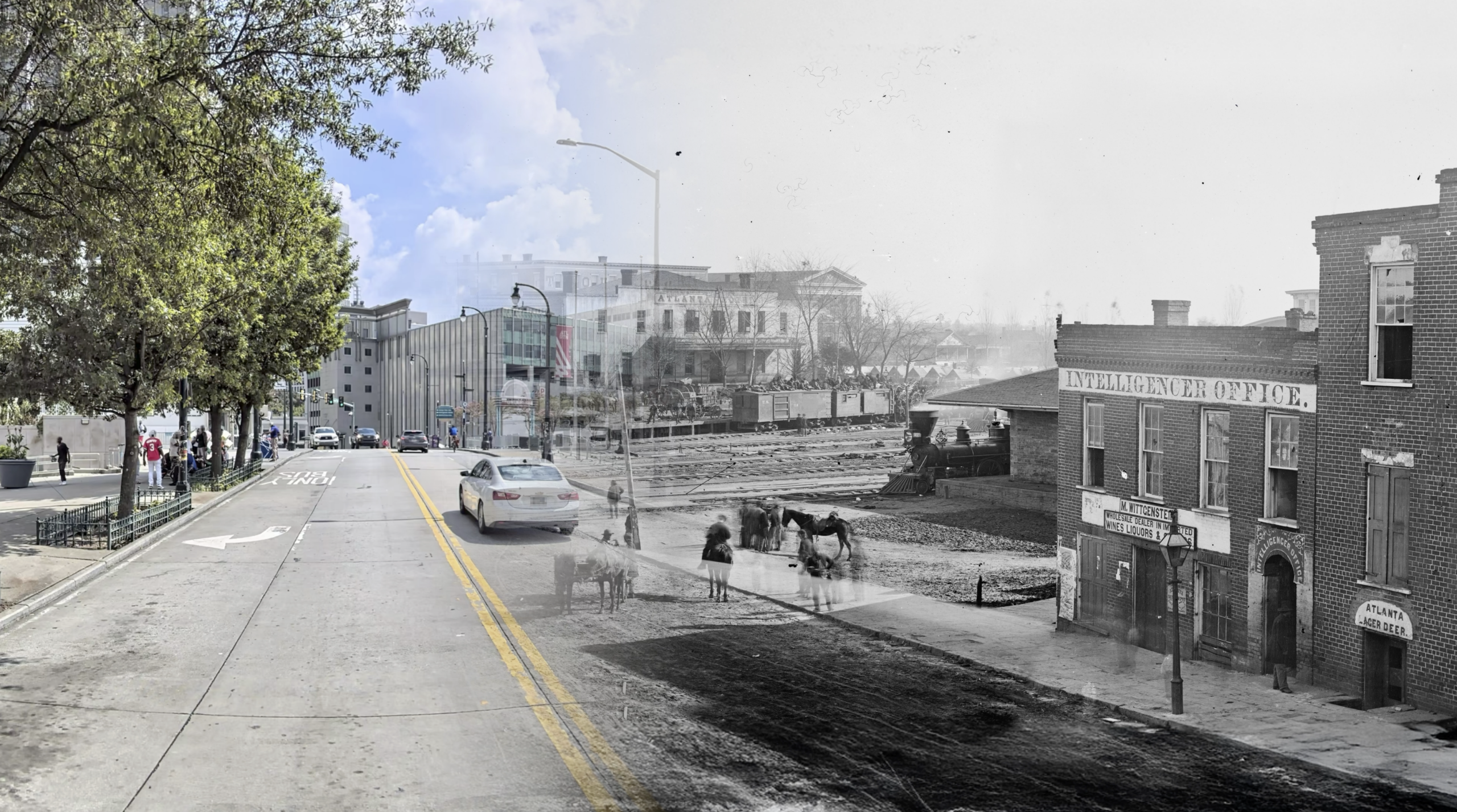
Atlanta Camera Obscura AI Time Portal
During the Union Army’s occupation of Atlanta at the end of the Civil War in 1864, the photographer George N. Barnard photographed the city before Atlanta was burned. Barnard created a series of famous photographs using a mobile darkroom tent which he moved around the city on a horse-drawn carriage. I will replicating this tent…
-
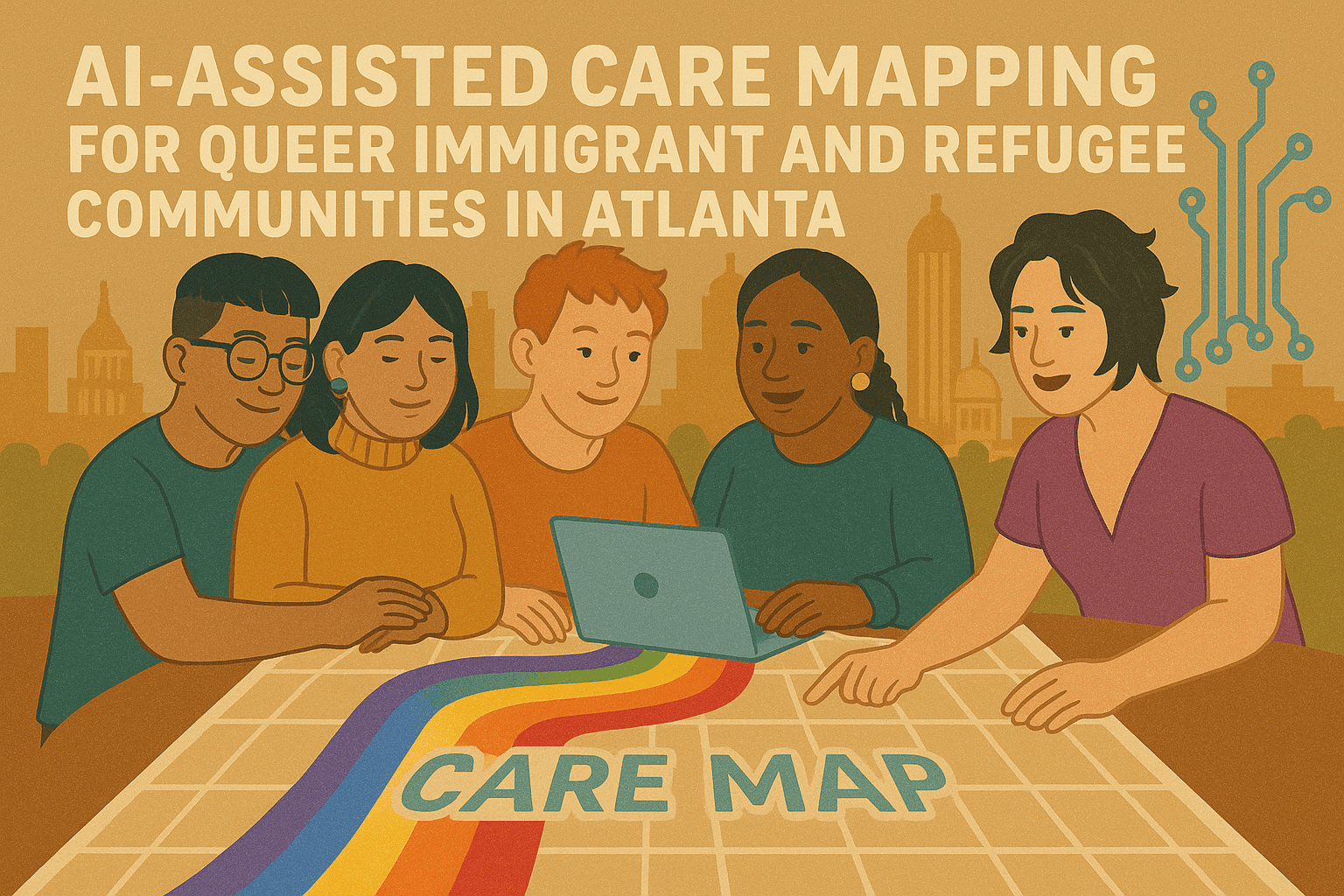
Stories of In-Betweenness: An AI-Assisted Memory Map of Atlanta’s Asian LGBTQ+ Immigrant and Refugee Communities
This digital humanities project documents the lived experiences of Asian LGBTQ+ immigrant and refugee communities in Atlanta. By using queer walking meditation (Trinh, 2020) and guided by Vietnamese Buddhist ethics of compassion, presence, and interbeing, the project gathers 10 oral histories along with participant-created drawings, poems, and symbolic artifacts through 3 sessions
-
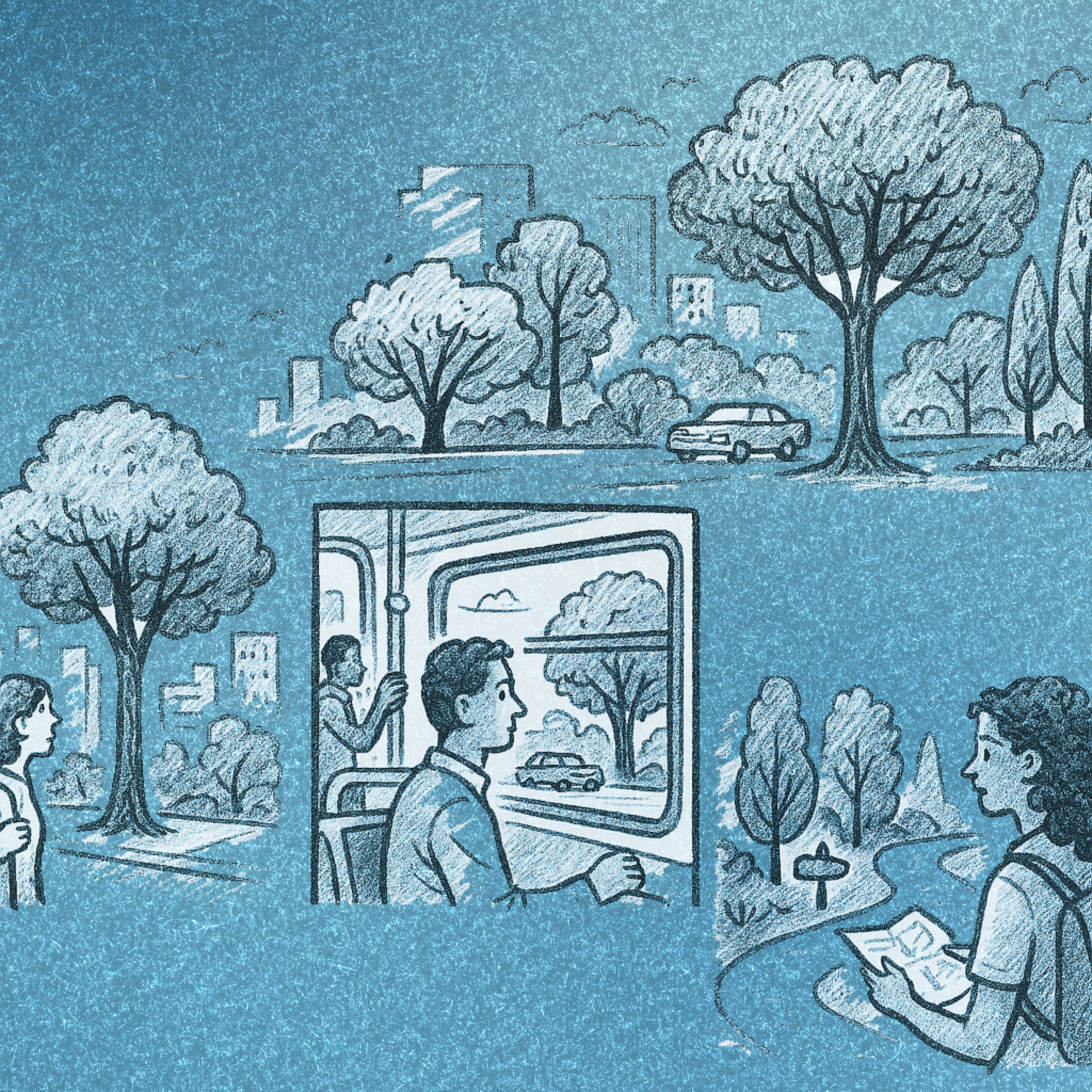
Exploring IT Tech Workers’ Commutes and Transit Infrastructure in Atlanta
PI: Richmond Y. Wong (Georgia Tech) Student Researchers: Soyoun Jang (Georgia Tech), Inha Cha (Georgia Tech) This project seeks for an in-depth understanding on the spatial and cultural dimensions of AI production in Atlanta through the commuting practices of IT and tech workers. Specifically, we will conduct qualitative design research with tech workers in Atlanta…
-
Co-designing Non-use AI toolkits with Creative Professionals
P.I. : Inha Cha This project explores the strategic value of AI non-use by creating toolkits through collaborative co-design workshops with creative professionals in film, design, and UX. By challenging the assumption that AI is always necessary, the research develops practical, low-cost resources that help professionals critically assess AI’s appropriateness in their workflows. The co-design…
-
TRANSFORMER: A Forum on AI and The Future of Games
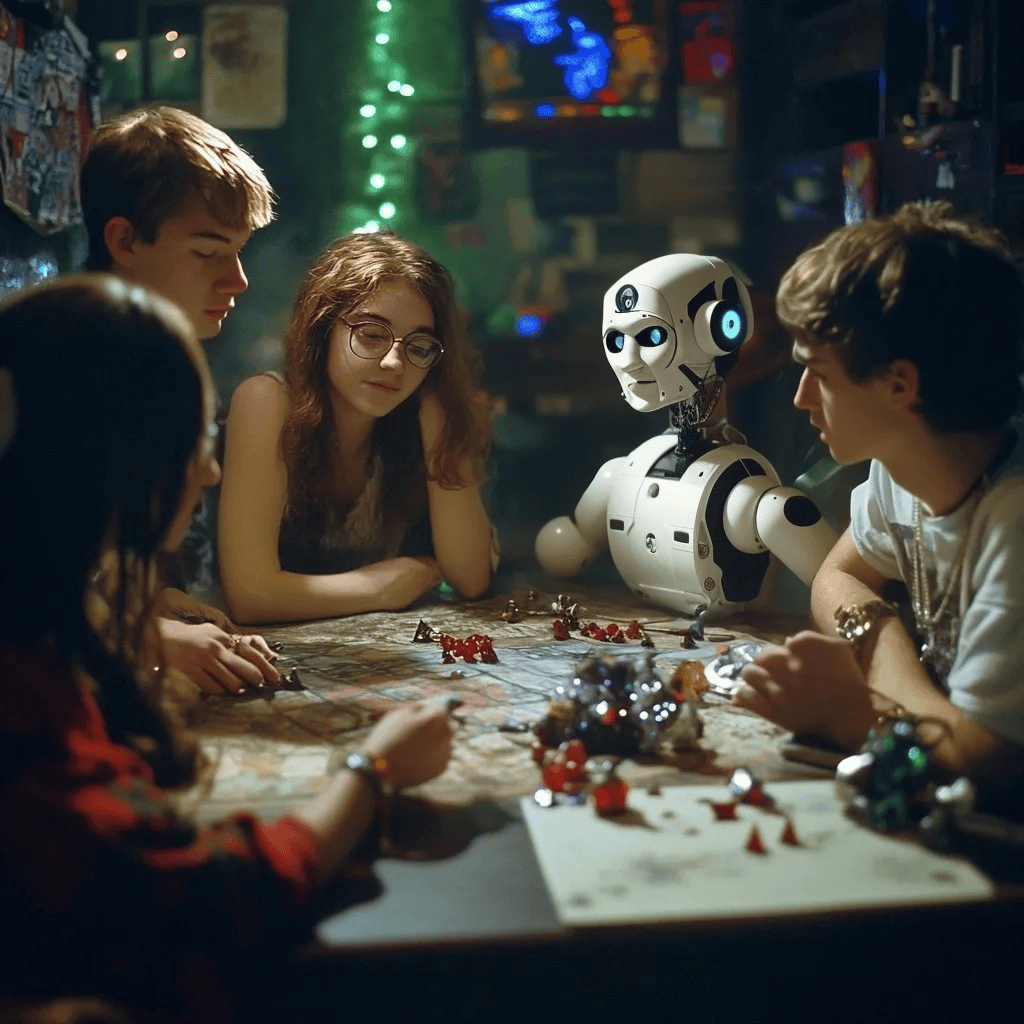
P.I. : Dov Jacobson Scholars and scientists, artists, programmers and promoters from Atlanta’s game industry and beyondwill meet for two days in April to prepare for the AI-saturated future.We’ll get our hands dirty, digging in to see how AI will transform game craft and game play. And unearthing insights that help our community use this new superpower creatively and ethically.
-
Generating Queer Histories: Prompting Critical Reflections on Generative AI in the Archives
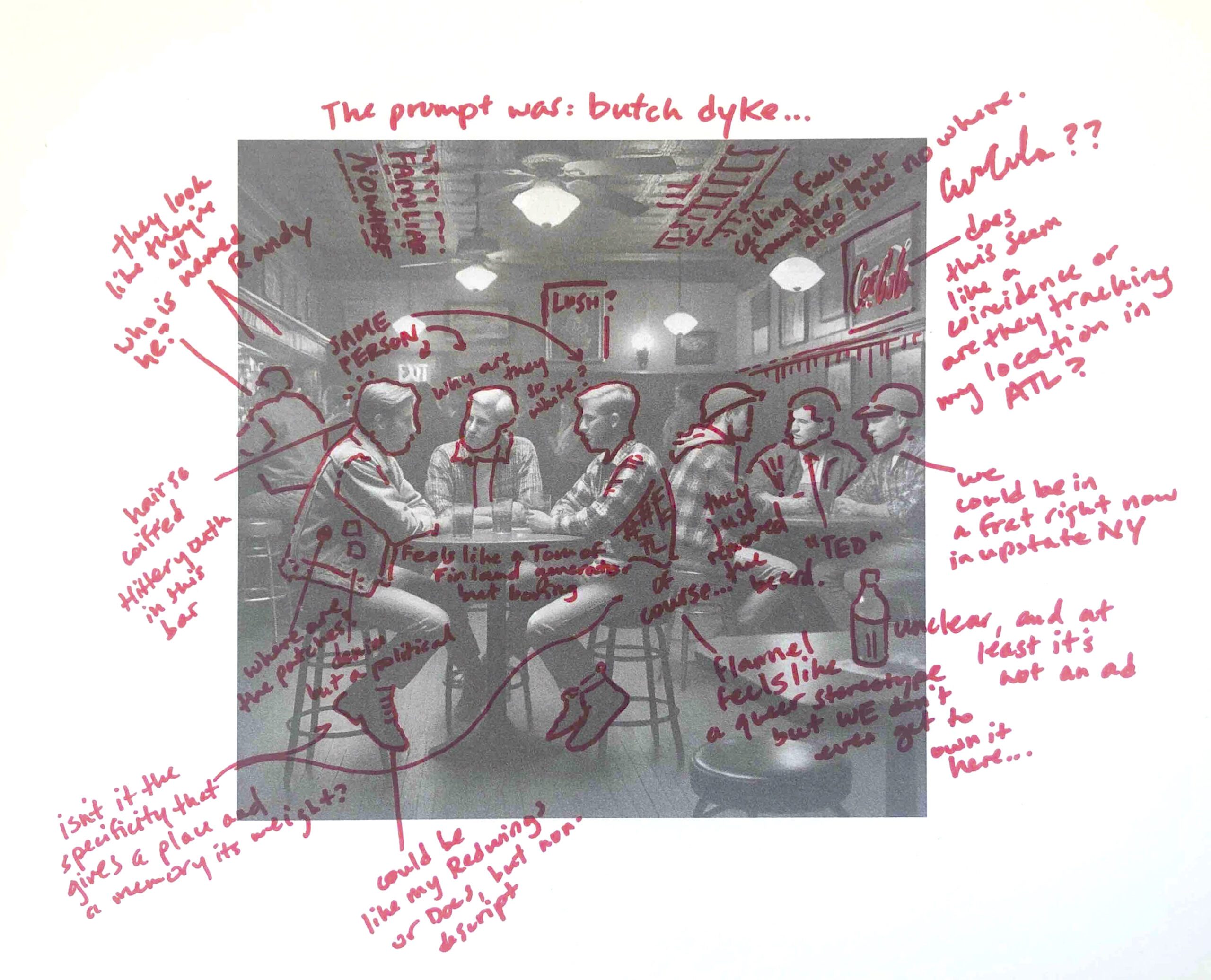
P.I. : Alexandra Teixeira Riggs, PhD Candidate, Digital Media, Georgia Institute of Technology As record management systems increasingly rely on GenAI to parse and retrieve data, LGBTQIA+ knowledge that is not easily categorized or indexed is left out, resulting in an increasingly narrow representation of queer identities and histories. “Generating Queer Histories” proposes to critically…
-
Into the Maker-Verse: Atlanta Edition
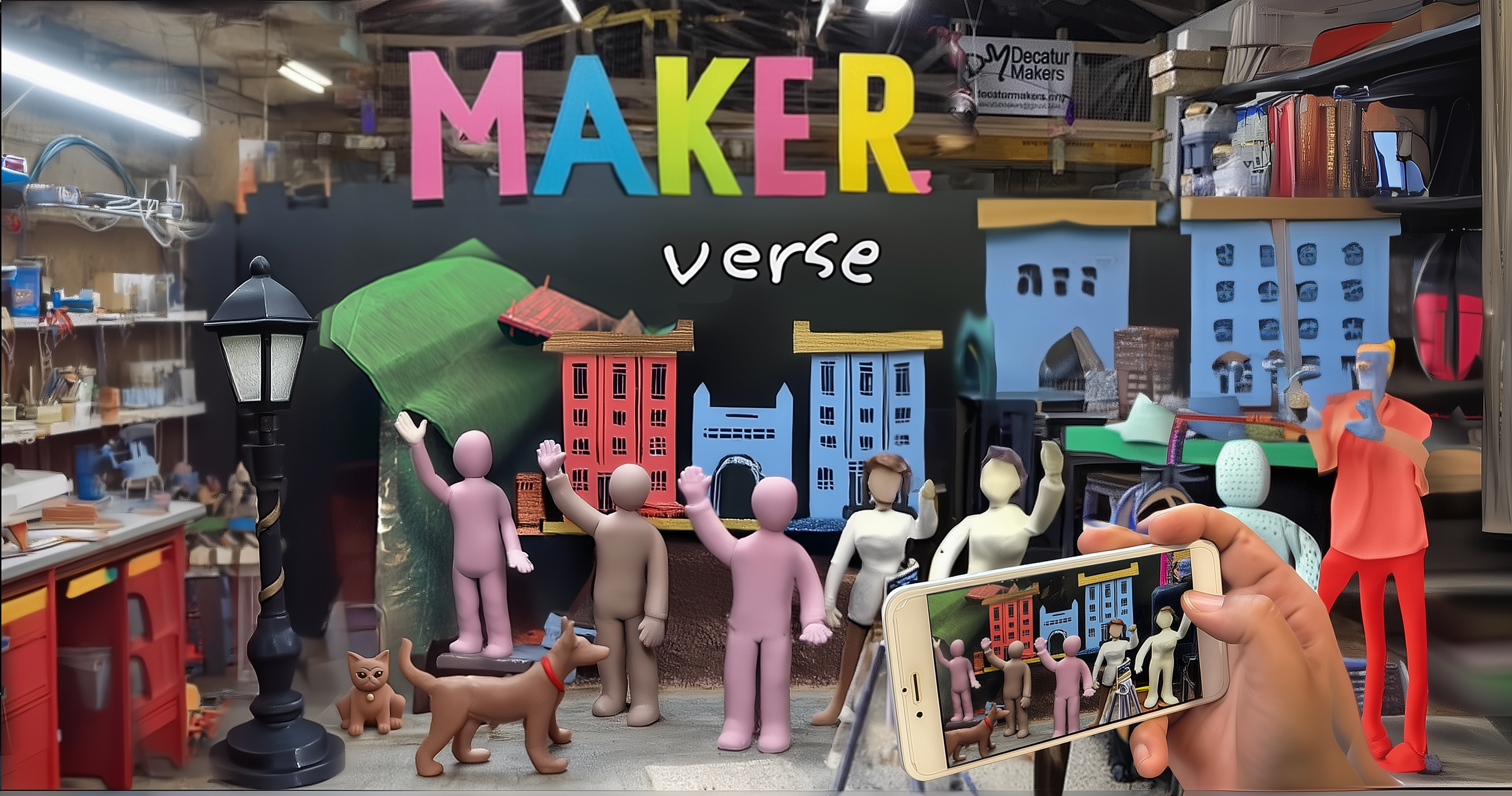
P.I. :Lorraine Kowalski Participants will explore the intersection of creativity, community, and AI in this hands-on event hosted by Decatur Makers. The event begins with an AI activity where participants use word prompts to generate visual images. They will then create figures, architecture, and scenes depicting “a day in the life of Greater Atlanta,” contributing…
-
Understanding Generative AI’s Impact to Users from Various Religious Background
P.I. :Jiaying Lu, School of Nursing’s Center for Data Science, Emory University; Wei Wu (Co-PI), Department of Religion, Emory University. The popularity of Generative AIs (GenAIs), such as OpenAI chatGPT and Google Gemini, has surged in recent years due to their remarkable capabilities in understanding natural language and assisting humans to accomplish a wide range…
-
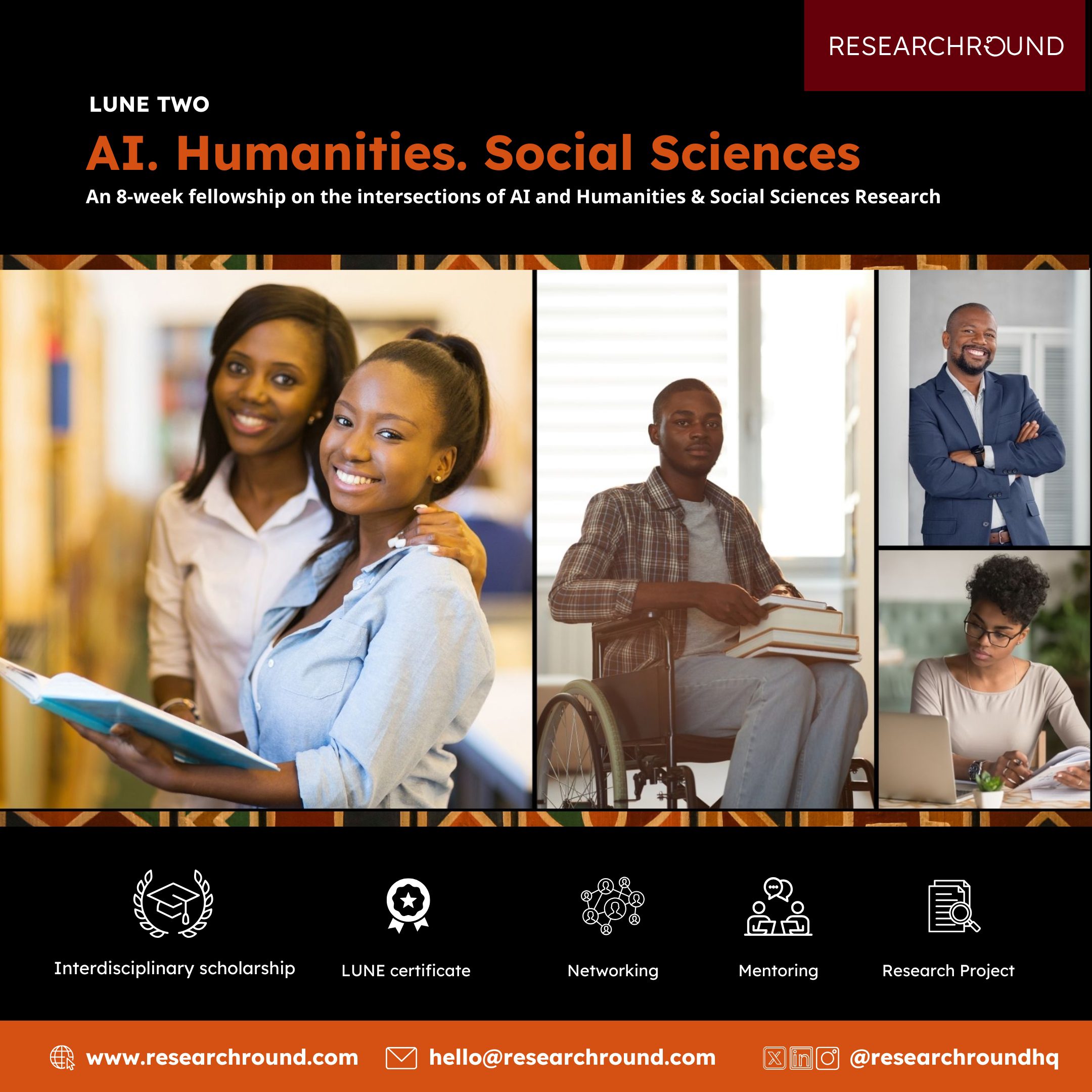
LUNE: AI. Humanities.Social Sciences Fellowship
P.I. — Habeeb Kolade, ResearchRound Through the AIAI seed grant, the Lune AI.Humanities.SocialSciences Fellowship will provide Nigerian graduate and postgraduate students in humanities and social sciences with an exploration of artificial intelligence through assignments, research projects, and coursework in NLP, machine learning, creative computing, learning technologies, and AI ethics. The program will offer remote delivery…
-
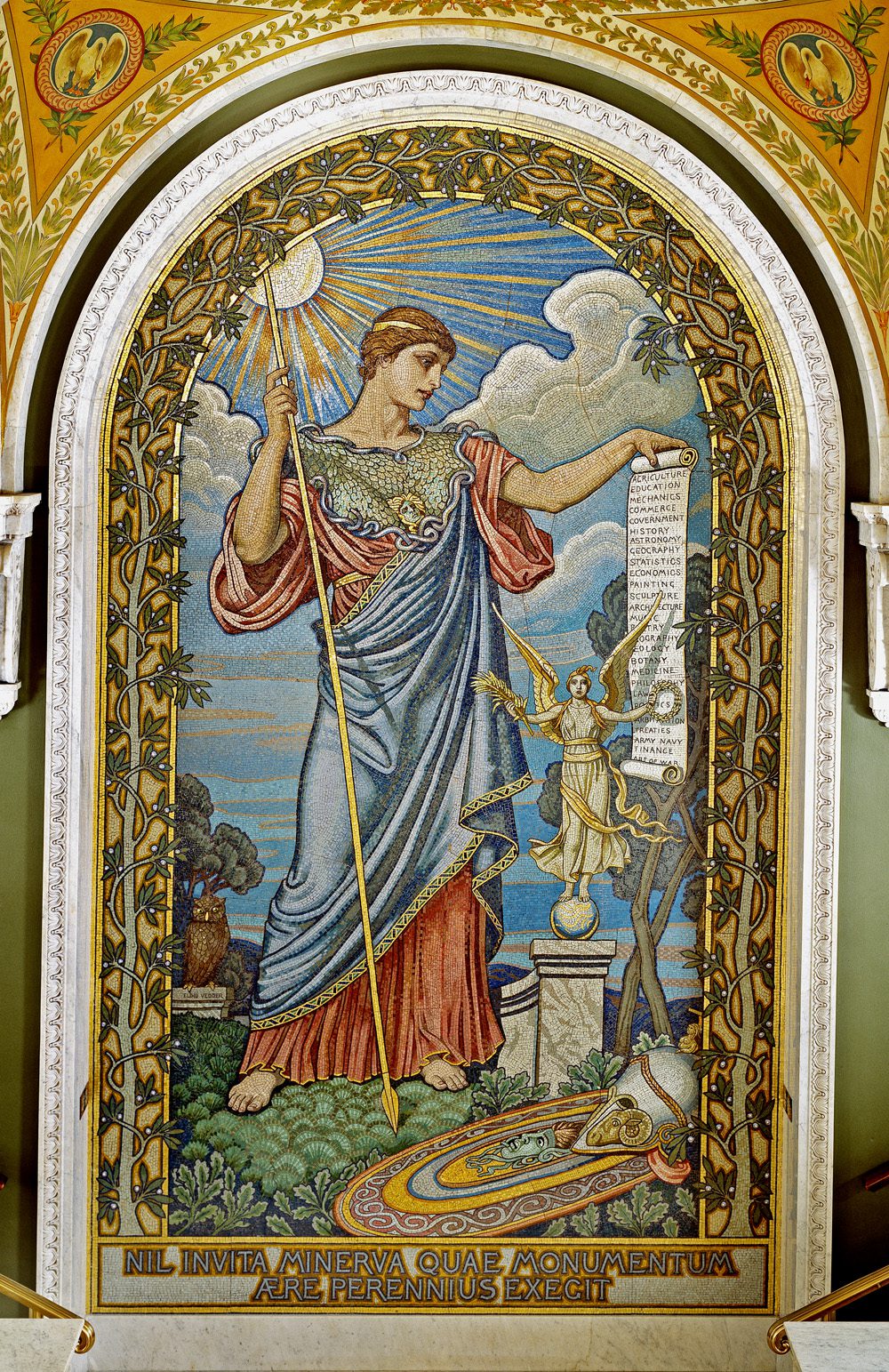
The People’s Canon for Human Flourishing in the Age of AI
P.I. — Whittney Barth and John Bernau As part of a larger book project (A Canon for Human Flourishing in the Age of AI) our AIAI seed grant will fund the creation of “The People’s Canon for Human Flourishing in the Age of AI.” The People’s Canon will be an online resource compiling responses from members of the…
-
Culture. Code. Humanity. A conference focused on transforming inspiration to action – ideas to impact.
P.I. — Imari Oliver, Georgia State University, Goode Stuff Entertainment The Culture. Code. Humanity. conference convenes some of the brightest and most innovative minds for thought-provoking conversations, purposeful activations, and artistic performances across three days designed to— transform inspiration into action – and ideas into impact. Informative discussions on some of the hottest topics, including…
-
Bridging Beliefs: An AI based Text-Mining Approach to Understanding Christian and Islamic Cultures
P.I. — MinJae Woo, Kennesaw State University The relationship between religion and culture shapes societal norms, values, and people’s behaviors. Religions, often ingrained since childhood, defining social conduct and shaping individual values. Christianity, having served as the religion of the Roman Empire for nearly fourteen centuries, has not only been a cultural cornerstone for Europe but…
-
Feminist Gender Equity AI Toolkit
P.I. : ANN KAZHINGA HOLLAND, SISTAH SISTAH FOUNDATION Led by African feminists, this project addresses gender biases in AI. The Feminist Gender Equity AI Toolkit is a comprehensive, Africa-focused resource aimed at fostering inclusive and equitable AI solutions.
-
Empowering Narratives: AI and Artistry in Atlanta’s Creative Communities
P.I. — JEREMIAH LONG, WEDGE Empowering Narratives merges AI technology with traditional arts to engage underrepresented youths and adults through workshops focused on generating imagery and creative storytelling, fostering creative agency, and exploring interdisciplinary AI career options with local artists and technologists.
-
Speaking of the Divine in an Age of Artificial Intelligence: An ALC on Theology and AI
P.I. — BRADY BEARD, Pitts Theology Library, Candler School of Theology, Emory University Members of this project will investigate the ways that religion, philosophy, and theology intersect with artificial intelligence. Focus will be given to the underlying principles and theories of AI and machine learning so that the members may reconsider the role of religious belief, practice,…
-
Data, Political Participation, and Being a Usable Past
P.I. — DANIEL HOROWITZ GARCIA, ALTERNATIVE HISTORIAN This project investigates the role of memory, political participation, and data in the lives of marginalized groups. It explores how people can be usable past in data-driven futures, and examines the impact of AI technologies on their political engagement.
-
The People’s Data on Cop City
P.I. — CARLEY RICKLES, GEORGIA TECH This project responds to public opposition to ‘Cop City’ by crowdsourcing and visualizing public comments, creating a physical artifact that bridges public access to comments from Atlanta city council meetings through a participatory platform.
-
FuturesAtlanta: Creative Engagement with Generative AI Art as a Method for Designing Local Community Futures with Children in Atlanta
P.I. : NOURA HOWELL, Georgia Tech This project engages Atlanta’s 10-12 year-olds to address local civic issues impacted by AI through GenAI Art workshops, and foster intergenerational dialogue on urban development.
-
Ethical Coding for DH: A Community Workshop
Project lead: Em Nordling (Emory University) Project teamNia Judelson (Emory, Ph.D. ’26, English), Em Nordling (Emory, Ph.D. ’26, English)Dez Miller, (Emory Comparative Lit)Alex Cors, (Emory ECDS) This project seeks to facilitate a cross-institutional, interdisciplinary consortium of DH graduate scholars in Atlanta. Building on this foundation, the consortium will coordinate a student-led workshop series in 2024-25, focusing…